Skip to content
Osceptrus walking tours
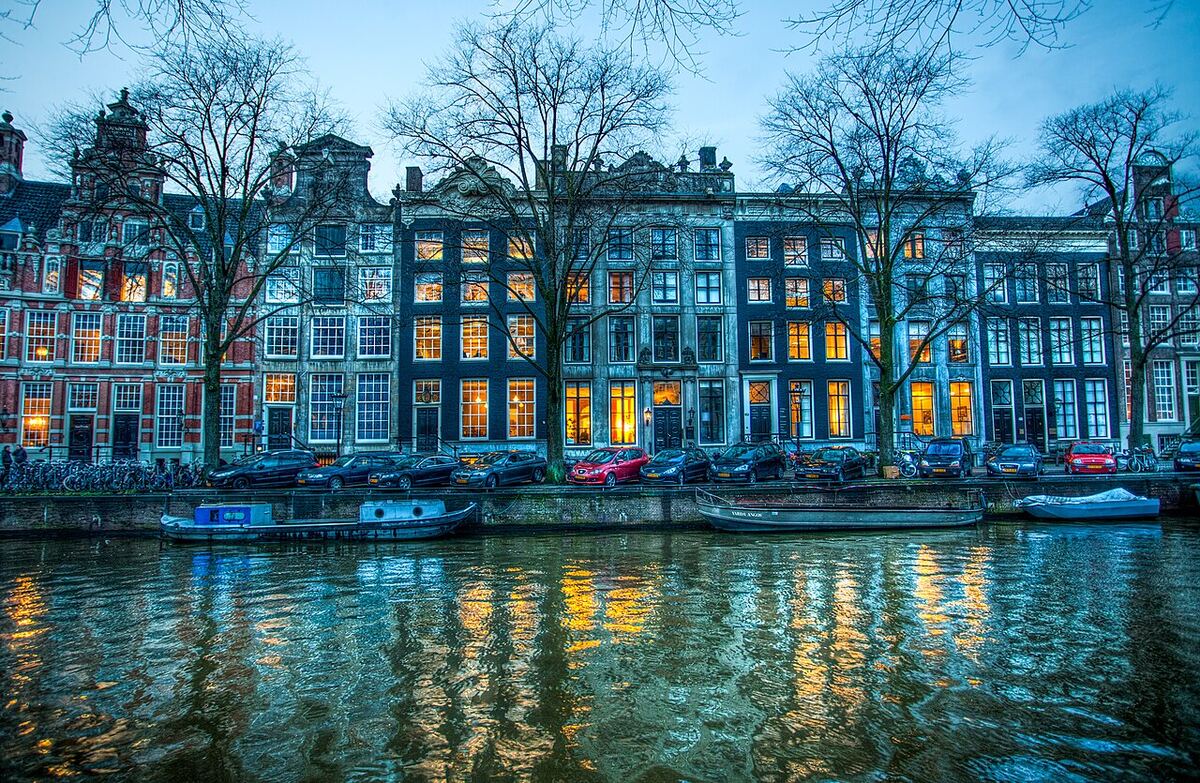
Lit canal houses along the Herengracht at blue hour
David and his wife, your guides on this walk
Your guides on this walk
A self-guided walking tour

Canal Lines — Amsterdam's history, one bridge at a time

The Secret Annex, a February strike, a church hidden in an attic, Rembrandt's anatomy lesson, a coffee plant that seeded Latin America, and the cinema bench fans carried off — organized into a walk from the Anne Frank House to a free ferry across the IJ.

28Stops
7Categories
€0Ferry fare, always
Plan Your Route

Canal ring to the IJ — click either map to explore

~10 km on foot · 5 min afloat A full day on foot — or split it: Legs One and Two one day, Three and Four the next.
Start

Anne Frank House, Prinsengracht

Prinsengracht 263 — Leg One starts at the door.

Open in Google Maps ↗
End

Eye Filmmuseum, across the IJ

IJpromenade 1 — free ferry from behind Centraal Station.

Open in Google Maps ↗

Skipping the reading? Here's how fast you can cover the ground

Walking ~5 km/h Slow jog 8 km/h
Western canals ~2.1 km~26 min~16 min
Old centre ~2.7 km~33 min~20 min
Jewish Quarter & Plantage ~3.0 km~36 min~23 min
To the IJ ~2.3 km~28 min~17 min
F3 ferry across the IJ~5 min — free, every few minutes, 24 hours
Total ~10 km on foot + ferry~2 h 10 min~1 h 20 min

Movement-only estimates from approximate street distances — museum visits (Anne Frank House, the Resistance Museum, Micropia, NEMO) easily add several hours. Book the Anne Frank House in advance.

Leg One · Where It Starts

Western canals: the Secret Annex and the Westermarkt

~2.1 km · 45 min walk Four stops share one square; then a canal-side stroll south to two film locations.
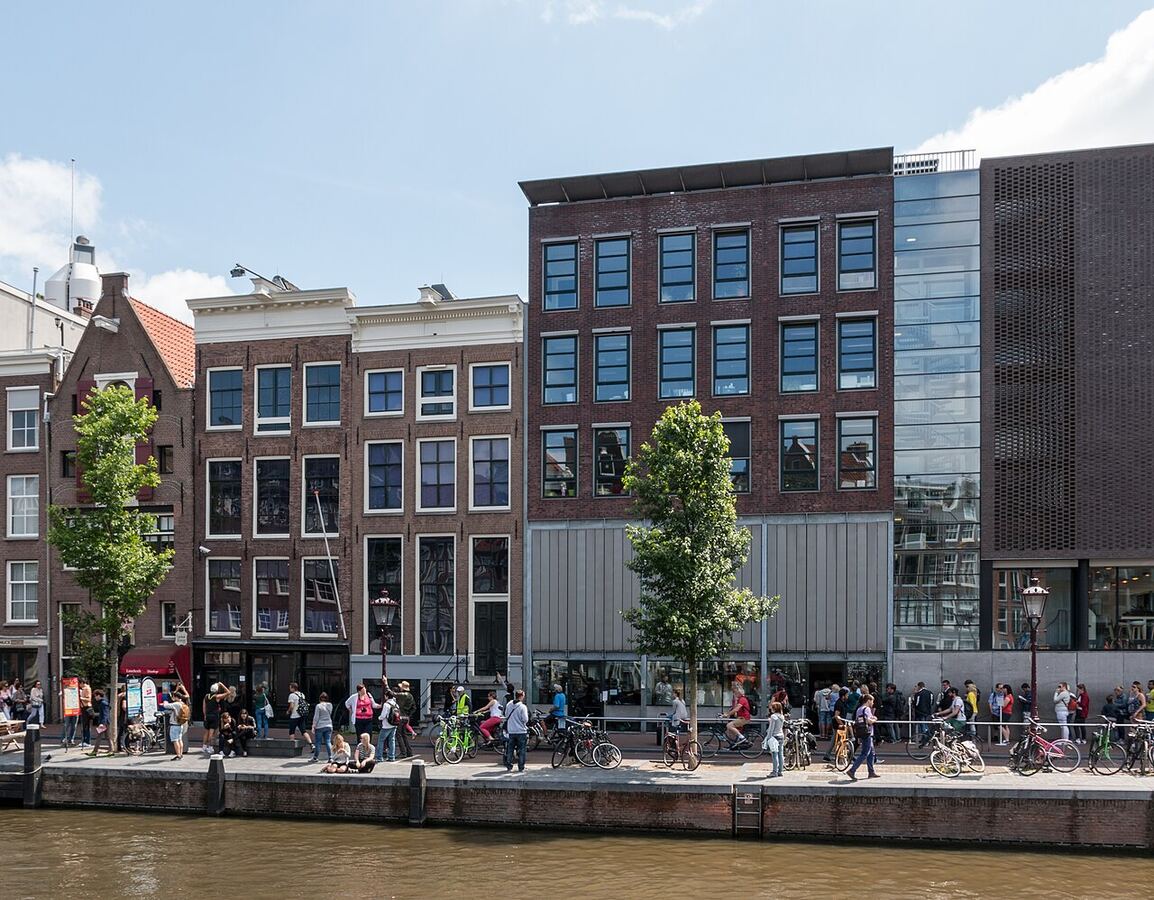
The Anne Frank House on the Prinsengracht canal
HistoryWWIIFilm
Step 1 · Start here, Prinsengracht 263

Anne Frank House — the Secret Annex

Eight people hid for two years in the annex behind Otto Frank's business at Prinsengracht 263. The house opened to the public on 3 May 1960 and now draws more than a million visitors a year — book a timed ticket well ahead. (Anne Frank House)

On 4 August 1944 a Sicherheitsdienst raid discovered the eight and arrested them together with helpers Victor Kugler and Jo Kleiman. (Anne Frank House timeline)

Film note: The Fault in Our Stars (2014) staged Hazel and Gus's first kiss here. The crew filmed the exterior and the ground-floor entrance; the steep stairs and attic were rebuilt on a soundstage in Pittsburgh. (Bubbly Living)
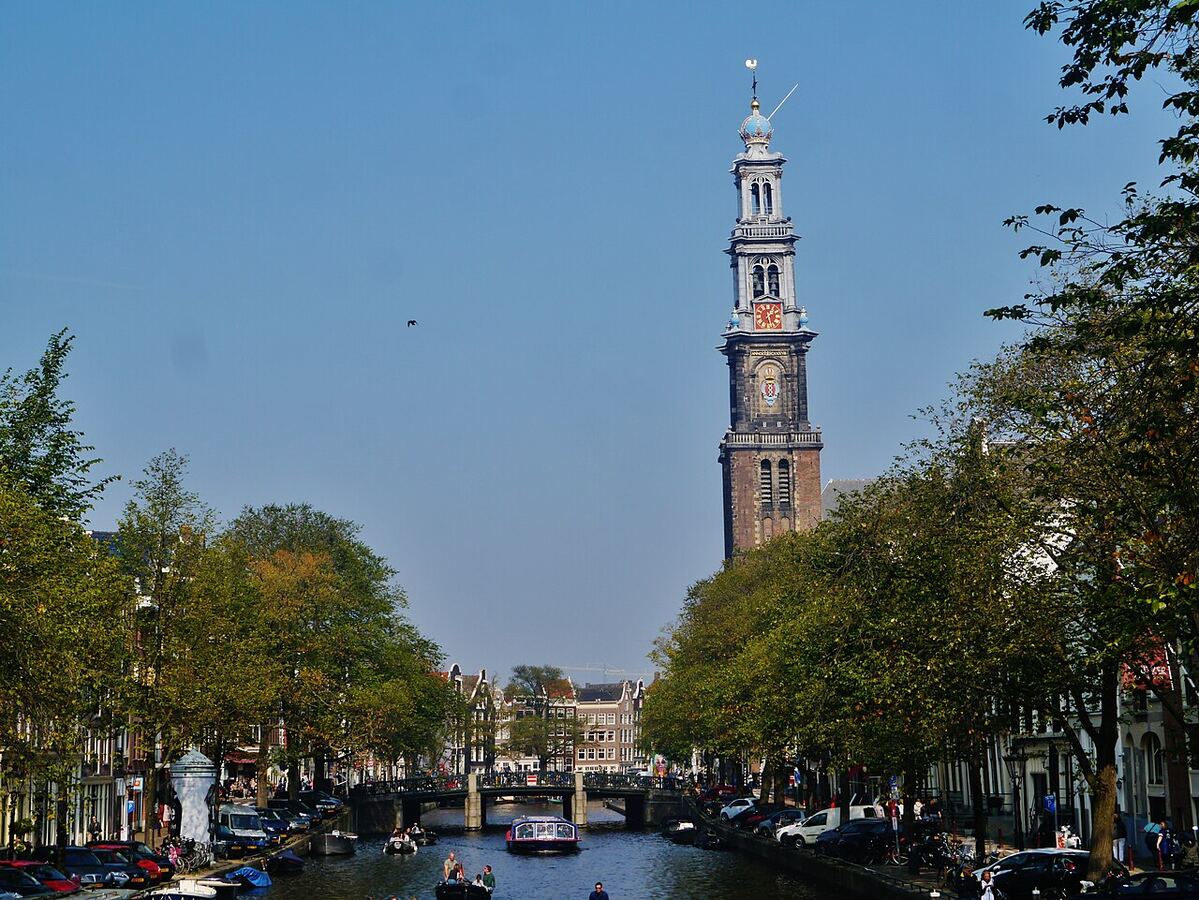
The Westerkerk tower rising over the Prinsengracht
HistoryWWII
Step 2 · Next door, 1 min

Westerkerk — Anne's bells and Rembrandt's lost grave

Built 1620–1631, its 87-metre tower is the tallest church tower in the city. Rembrandt was buried inside on 8 October 1669 in a rented grave whose location was later lost. (Qualla)

On 11 July 1942, Anne Frank wrote that the Westertoren clock chimed every fifteen minutes and that she found the sound reassuring, especially at night — listen for it from the annex windows. (Amsterdam Now)

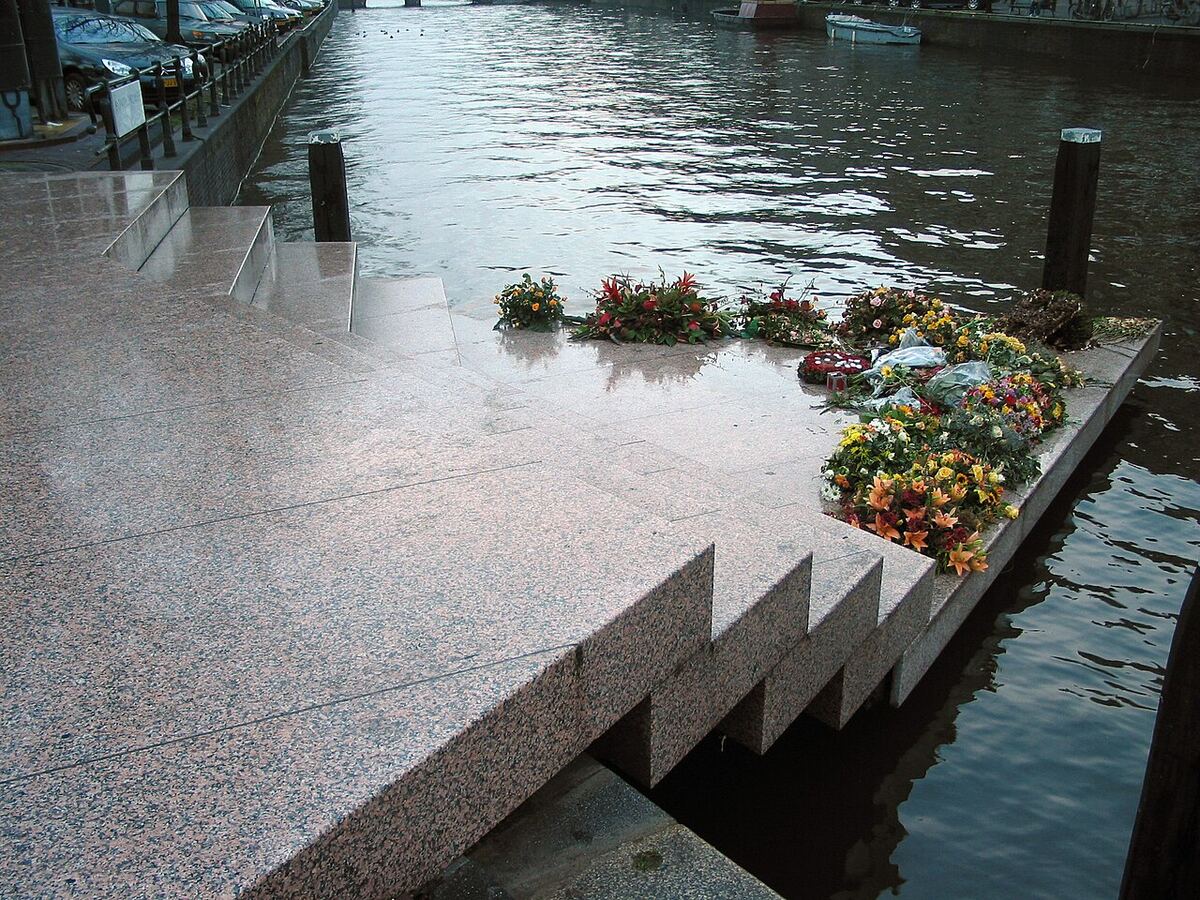
The pink granite triangles of the Homomonument beside the Keizersgracht
HistoryWWII
Step 3 · On the Westermarkt, steps from the church

Homomonument

Three pink granite triangles set into the square and the canal edge, designed by Karin Daan and unveiled on 5 September 1987, commemorate gay men and women persecuted for their sexuality. Its roots go back to 4 May 1970, when two activists tried to lay a wreath for gay victims of WWII at the National Monument — they were arrested and the wreath destroyed. (Rijksdienst voor het Cultureel Erfgoed)

Each triangle has 10-metre sides; together they outline a single 36-metre triangle across the square. (CIPDH-UNESCO)

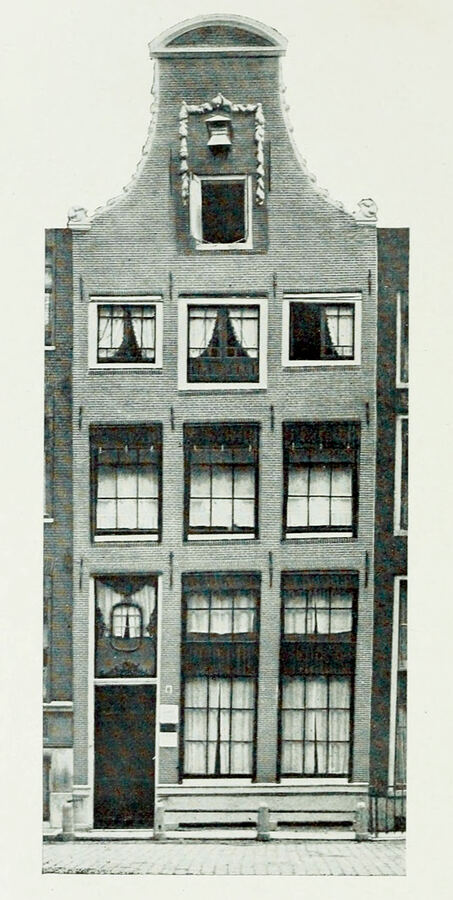
Historic engraving of the house where Descartes lived in Amsterdam in 1634
ScienceHistory
Step 4 · Westermarkt 6, across the square

Where Descartes lived

The French philosopher-mathematician René Descartes lived in the house at Westermarkt 6 during the summer of 1634. Look for the plaque placed by the Alliance Française on 16 October 1920. (Historical Marker Database)

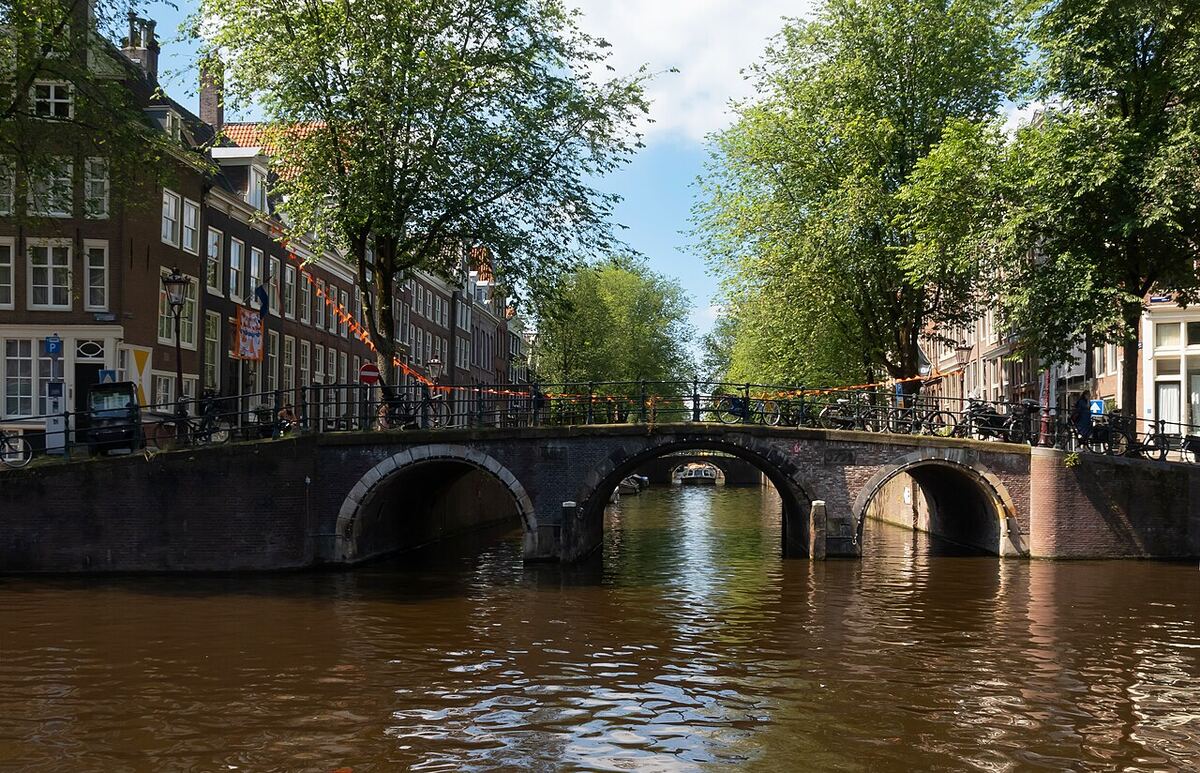
The small bridge where the Leidsegracht meets the Herengracht
Film
Step 5 · 15 min south along the Herengracht

The Fault in Our Stars bench

The green bench where Hazel and Gus talk sits in front of Leidsegracht 4, where the Leidsegracht meets the Herengracht. Filming began on 26 August 2013, with only three days shot in Amsterdam. (Bubbly Living)
Fans made it a pilgrimage site so fast that the original bench vanished in 2014; the city promised to replace it before the film's Dutch release. (NY Daily News)

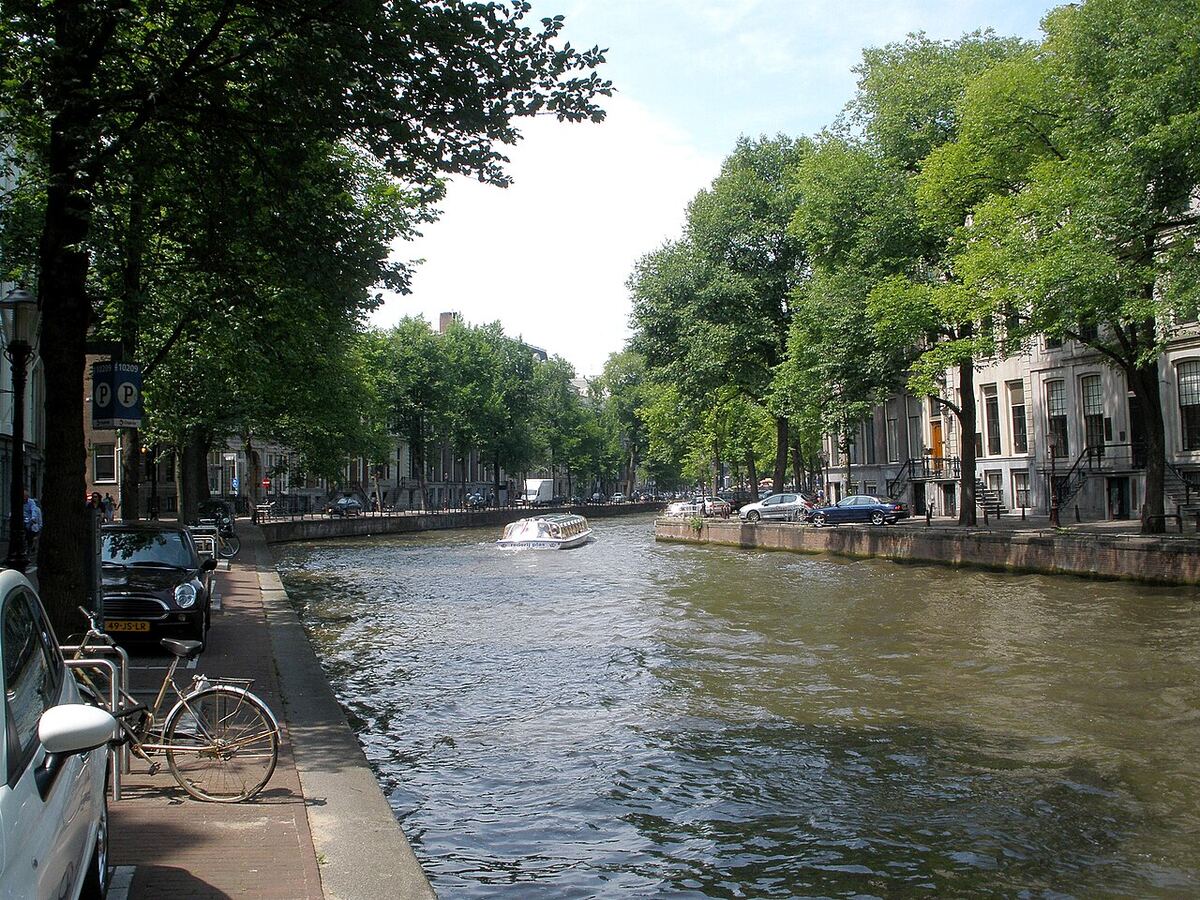
The grand double-width canal houses of the Golden Bend on the Herengracht
FilmHistory
Step 6 · 8 min east on the Herengracht

The Golden Bend — Ocean's Twelve territory

The widest, grandest stretch of the Herengracht, the "Gouden Bocht," shows up in Ocean's Twelve (2004), which also shot at the Pulitzer hotel bar, Koningsplein, Kalverstraat and Heiligeweg. (I amsterdam)

Herengracht 497 — the KattenKabinet, a museum devoted entirely to cats in art — is also listed among the film's locations. (Things On TV)

Route tip: Book the Anne Frank House for your start time — the first four stops cluster around the Westermarkt, so you can do the church, the monument and the Descartes plaque while you wait.

Leg Two · The Old City

Old centre: cinema palace, hidden worship, and the Dam

~2.7 km · 50 min walk From the Reguliersbreestraat through the Begijnhof to the Nieuwmarkt.
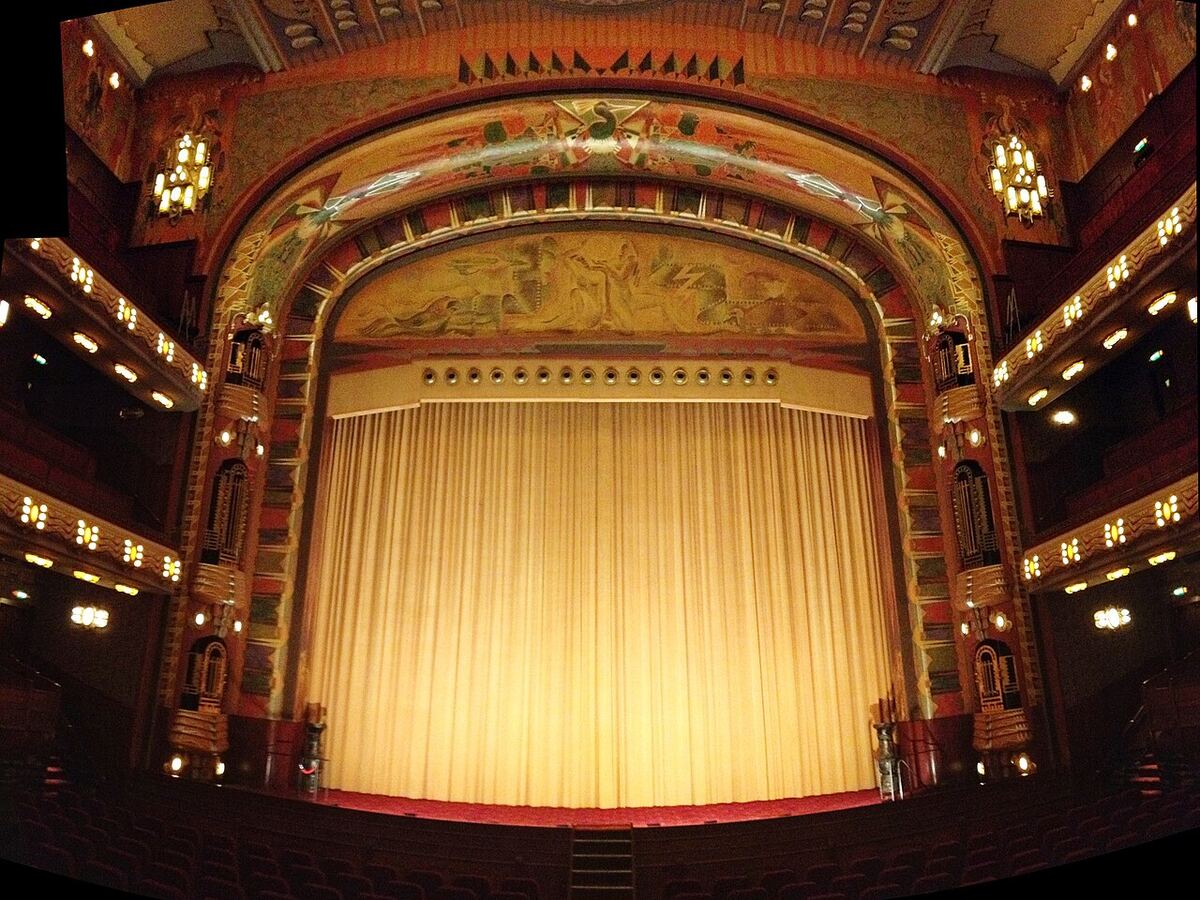
The ornate art deco facade of Theater Tuschinski
FilmWWIIHistory
Step 7 · 6 min east, Reguliersbreestraat

Tuschinski — the world's most beautiful cinema

Abraham Tuschinski opened his film palace on 28 October 1921 — a blend of art deco, Amsterdam School and oriental ornament the Dutch call "Tuschinski baroque." In 2021, Time Out named it the most beautiful cinema in the world. It's still a working cinema; catch a screening in the main hall. (NRC)

Tuschinski, a Polish-Jewish immigrant, was arrested in 1942, deported via Westerbork to Auschwitz, and murdered there in September of that year. (National Geographic NL)

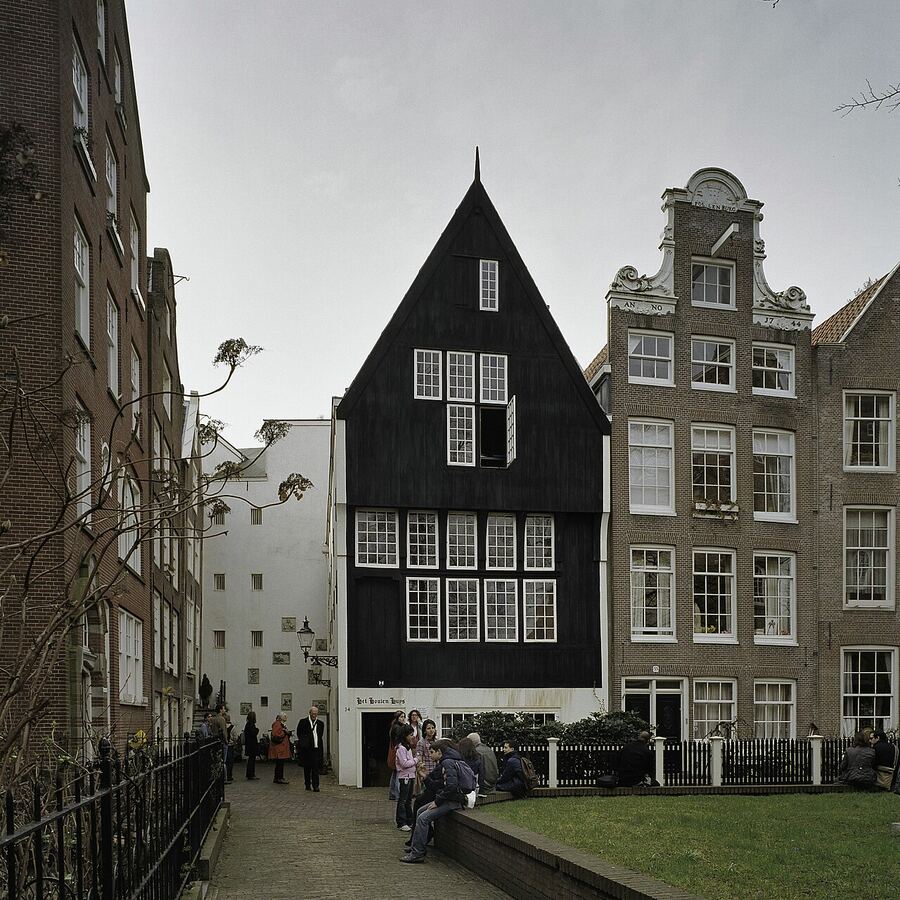
The black wooden gable of Het Houten Huys in the Begijnhof
HistoryUnique
Step 8 · 8 min west via the Rokin to Spui

Begijnhof & the wooden house

Through a quiet door off the Spui is a courtyard of houses long reserved for single women — originally Beguines. Its black-gabled Houten Huys was built around 1528–1530, after the city had banned wooden houses following the great fires of 1421 and 1452. (Wikipedia NL)

Strange-but-true: it was long billed as Amsterdam's oldest house, until tree-ring dating gave that title to Warmoesstraat 90 (c. 1485). (Amsterdamse Binnenstad)

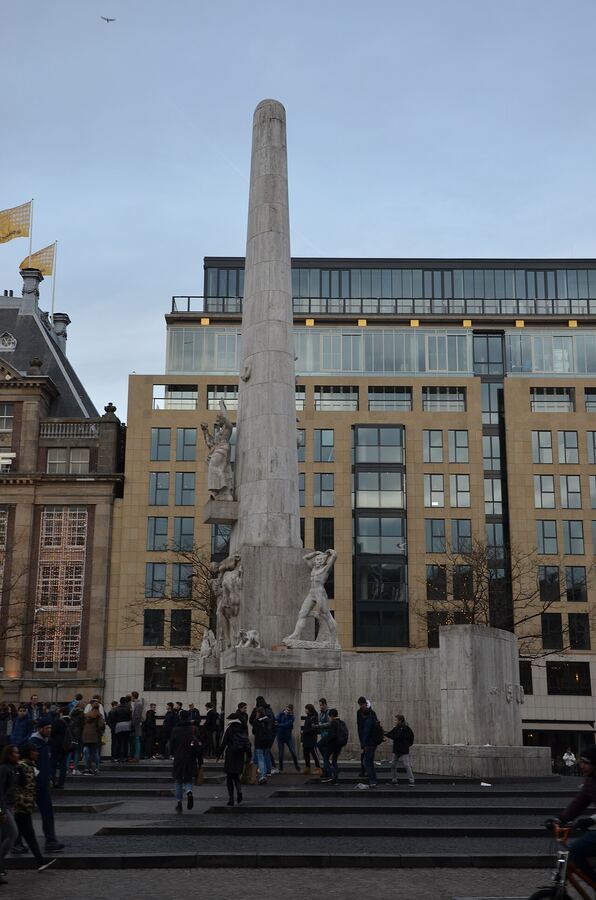
The white National Monument obelisk on Dam Square
WWIIHistory
Step 9 · 6 min north up the Kalverstraat

Dam Square — National Monument & the 7 May shooting

J.J.P. Oud's National Monument was unveiled by Queen Juliana on 4 May 1956. Eleven urns hold soil from execution grounds and war cemeteries in each Dutch province; a twelfth holds soil from the former Dutch East Indies. (Wikipedia) Every 4 May the king lays a wreath here and the whole country falls silent for two minutes at 8 p.m. (Wikipedia DE)

Two days after liberation, on 7 May 1945, German navy soldiers in the Grote Club at the corner of the Kalverstraat opened fire on the celebrating crowd, killing 32 people. (Verzetsmuseum) (Wikipedia)

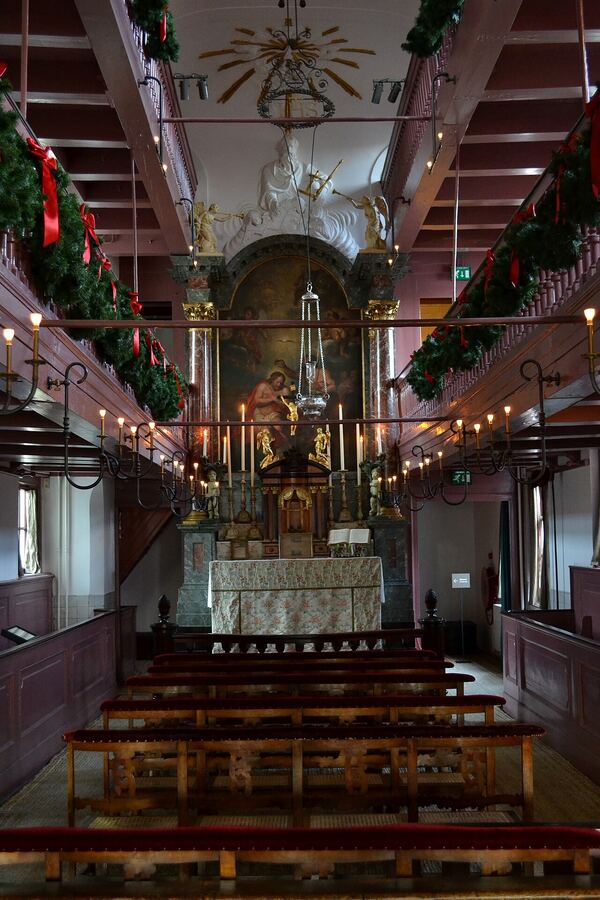
The hidden attic church inside Our Lord in the Attic
HistoryUnique
Step 10 · 7 min east, Oudezijds Voorburgwal 38

Our Lord in the Attic — a church hidden in a house

When Amsterdam's Protestant government banned public Catholic worship, merchant Jan Hartman built a complete church into the attic of his canal house. It came into use in 1663 and survives intact. (Museum.nl)

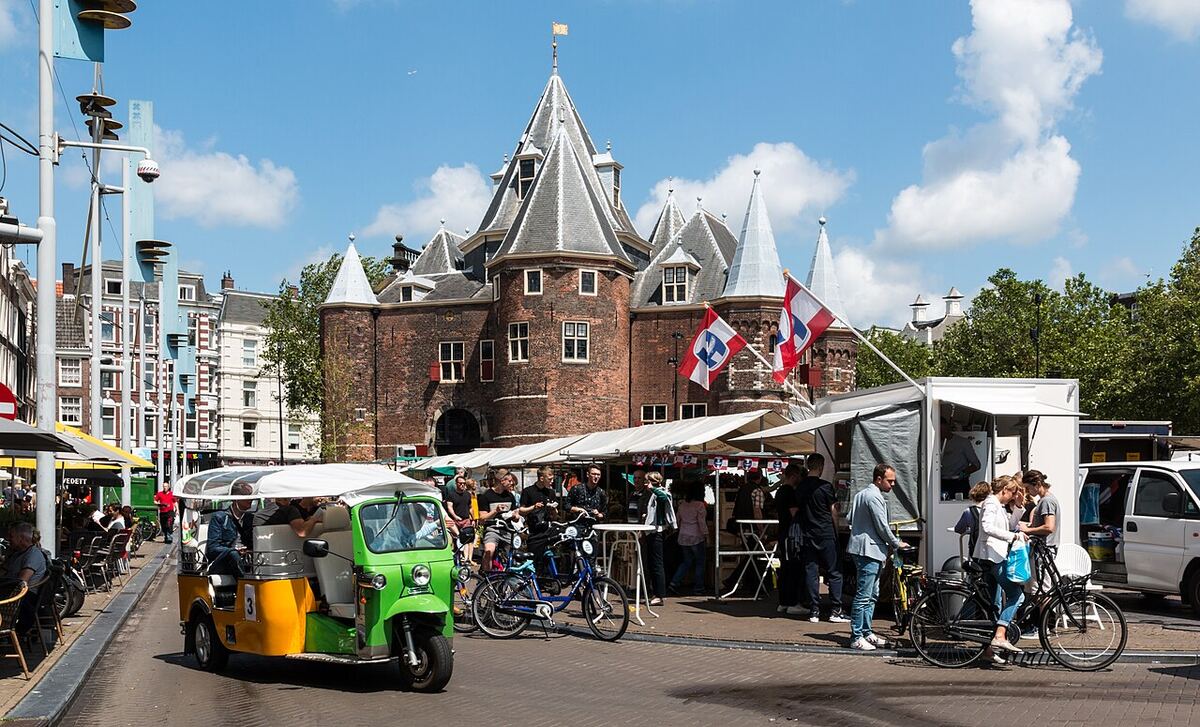
The turreted 15th-century Waag on the Nieuwmarkt
MedicalScienceHistory
Step 11 · 5 min, the Nieuwmarkt

The Waag — Rembrandt's anatomy lesson

Built in 1488 as St. Anthony's Gate, it became the city's weigh house in 1617–18. The surgeons' guild gave dissection lectures in its guild room from 1619 and added the domed Theatrum Anatomicum in 1691. (Waag)

This is where Dr. Nicolaes Tulp taught anatomy on the bodies of executed criminals — the scene Rembrandt painted in The Anatomy Lesson of Dr. Nicolaes Tulp (1632), now in the Mauritshuis in The Hague. (Leiden University)

Leg Three · Remembering

Jewish Quarter & Plantage: war memory and living science

~3.0 km · 1 hr walk The heart of the tour — WWII memorials sit block-for-block beside a zoo, a microbe museum and a 1638 garden.
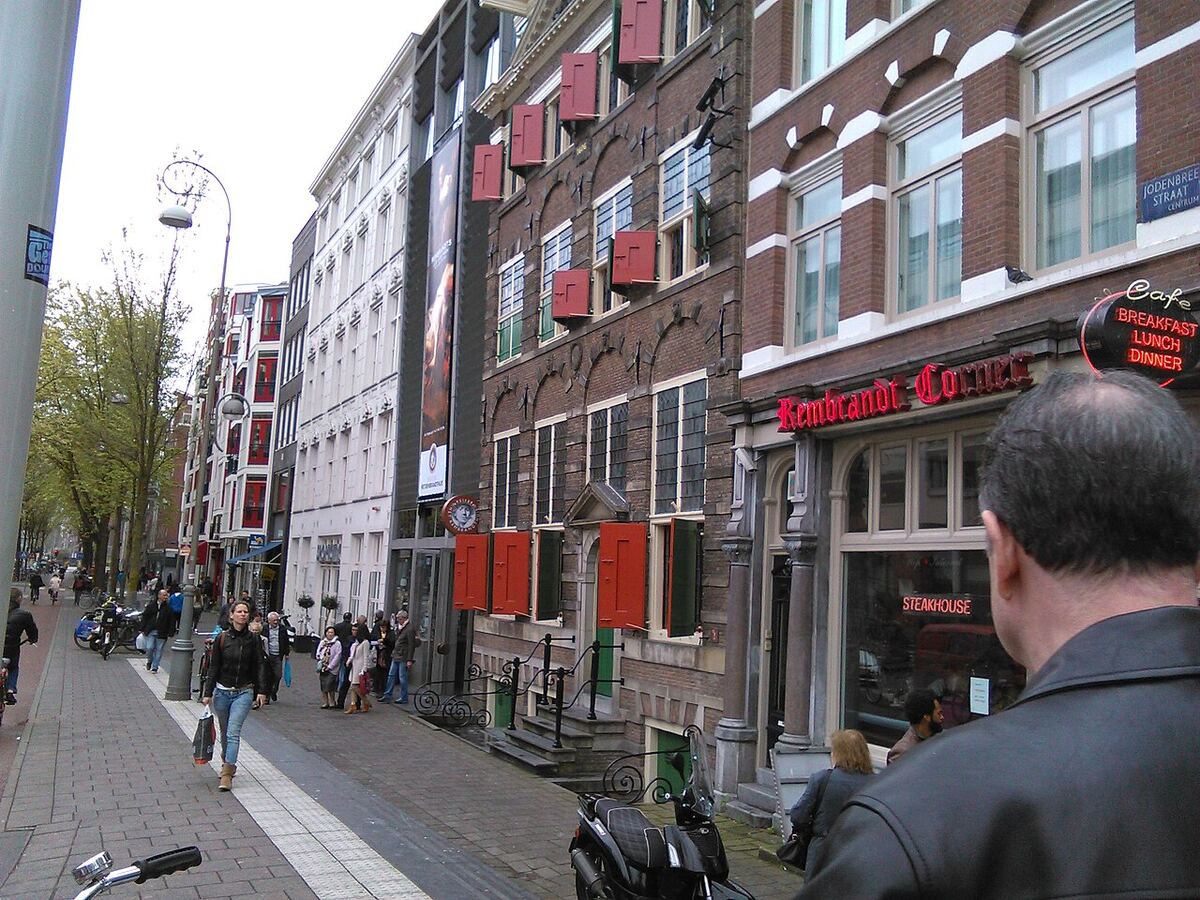
The Rembrandt House Museum on the Jodenbreestraat
History
Step 12 · 4 min southeast, Jodenbreestraat 4

Rembrandt House

Rembrandt lived and worked here from 1639 to 1658, on the main street of the old Jewish quarter. (Museum.nl) After his bankruptcy in 1656, an inventory of everything he owned was drawn up — the curators later used it to refurnish the house, which opened as a museum in 1911. (CODART)

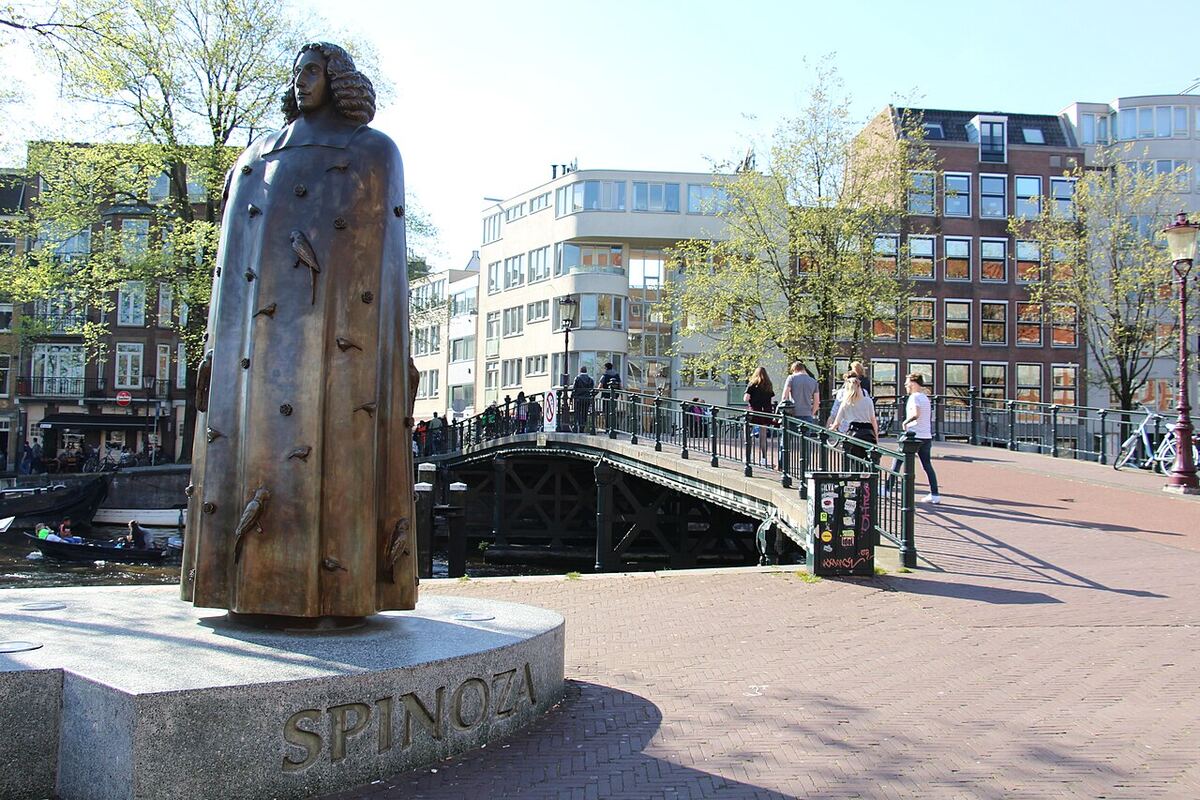
Nicolas Dings's bronze Spinoza Monument beside the Zwanenburgwal
ScienceHistory
Step 13 · 3 min, by the Zwanenburgwal

Spinoza — the lens-grinding heretic

Baruch Spinoza was born on 24 November 1632 in a house on this canal. Amsterdam's Jewish community banned him in 1656; he earned his living grinding optical lenses while writing the philosophy that made him one of the Enlightenment's founders. (Nicolas Dings)

Nicolas Dings's monument, covered in parrots and roses, was unveiled on his birthday, 24 November 2008. (Nicolas Dings)

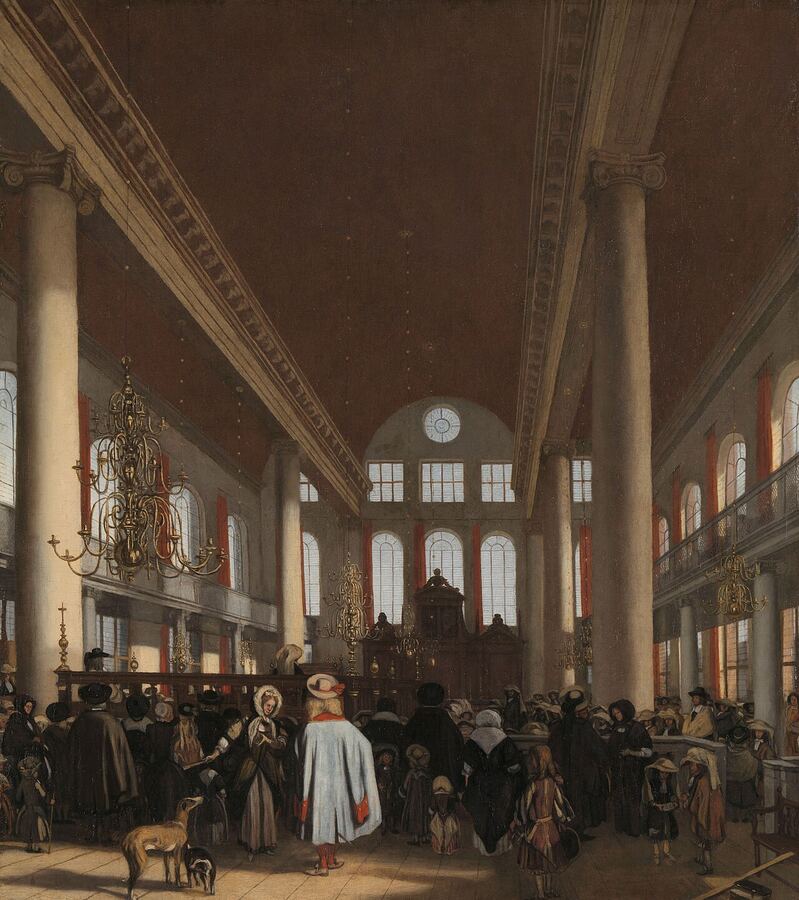
Emanuel de Witte's painting of the candlelit Portuguese Synagogue interior
HistoryWWIIUnique
Step 14 · 5 min, Mr. Visserplein

Portuguese Synagogue

Inaugurated in 1675, its original interior is fully intact — and it still has no heating or electricity, lit by hundreds of candles in its chandeliers. The king attended its 350th-anniversary service in 2025. (Royal House of the Netherlands)

The complex also houses Ets Haim, described as the oldest operating Jewish library in the world. (Museum.nl)

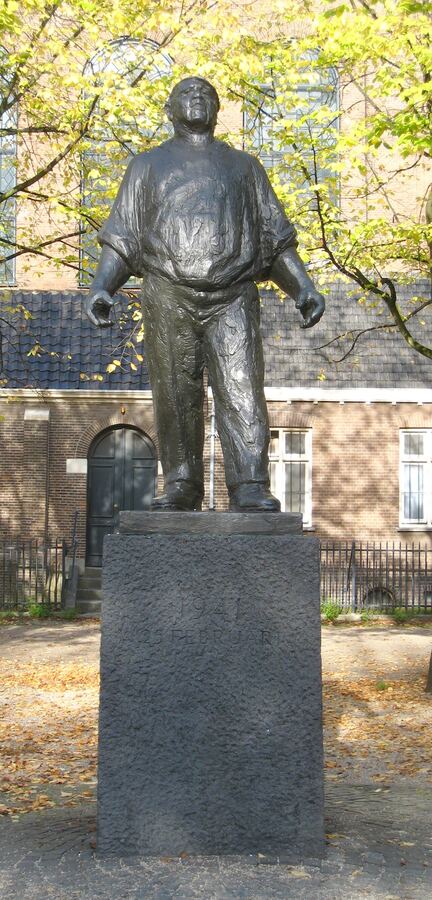
Mari Andriessen's bronze Dokwerker statue on the Jonas Daniël Meijerplein
WWII
Step 15 · Across the square

The Dokwerker — the February Strike

On 25–26 February 1941, after German police rounded up hundreds of Jewish men in Amsterdam, workers across the city walked off the job — the first mass protest against the persecution of Jews in occupied Europe. Mari Andriessen's dockworker statue was unveiled here on 19 December 1952, and the strike is commemorated at this spot every 25 February. (Memorial Museums) (Stadscuratorium)

The narrow brick corridors of the Holocaust Names Monument
WWII
Step 16 · 4 min, Weesperstraat

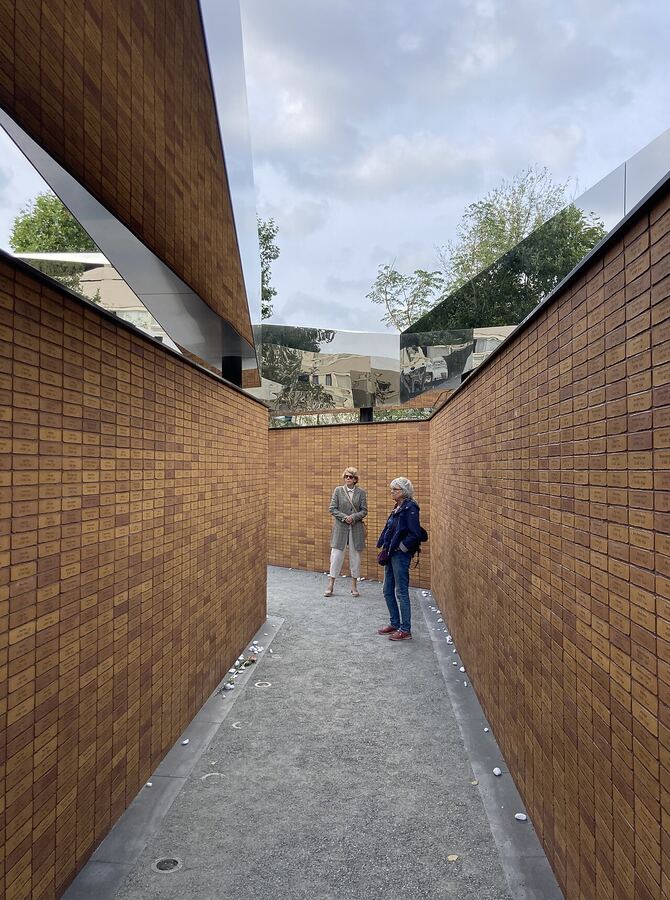
Holocaust Names Monument

Designed by Daniel Libeskind and opened on 19 September 2021: 102,000 bricks, each carrying the name of a Jewish, Roma or Sinti victim from the Netherlands, plus 1,000 blank bricks for those whose names are unknown. (Studio Libeskind) (City of Amsterdam)

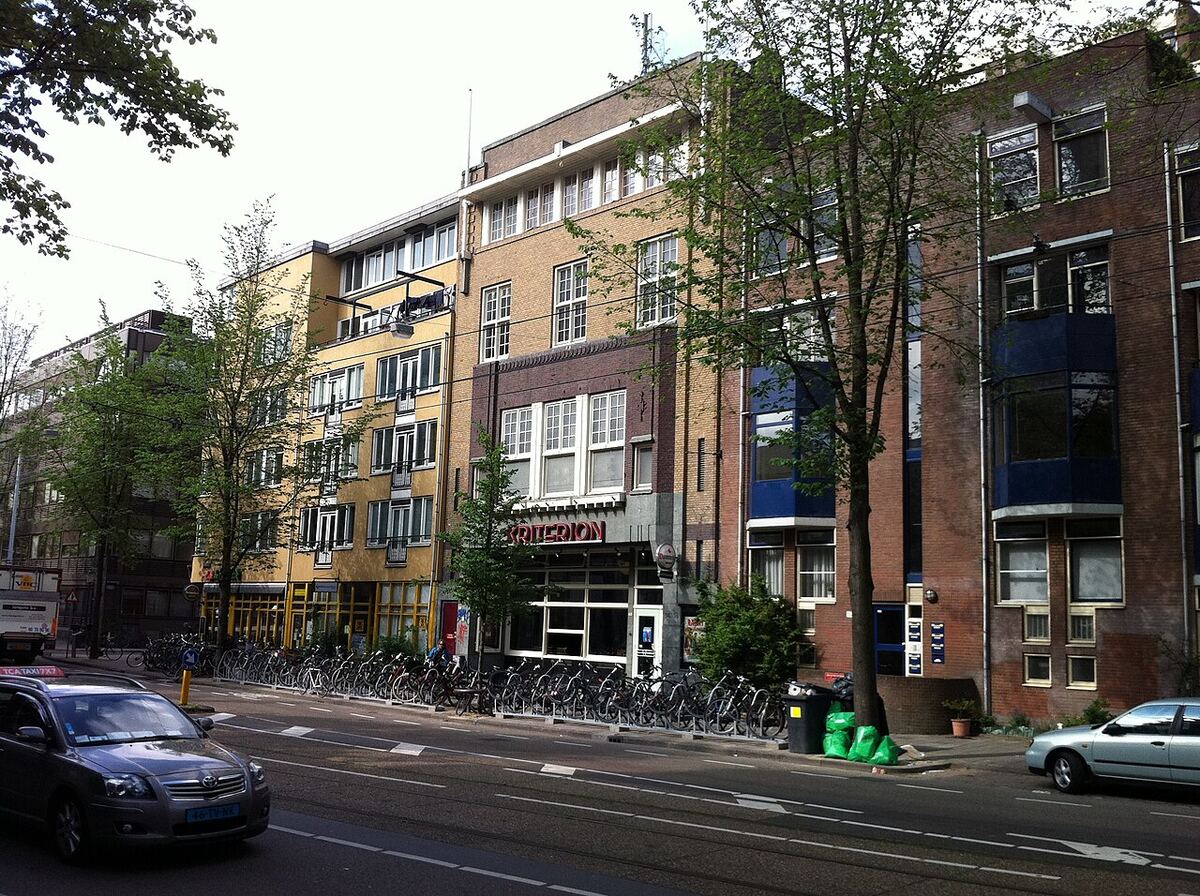
The Kriterion cinema on the Roetersstraat
FilmWWII
Step 17 · 5 min, Roetersstraat 170

Kriterion & Roeterseiland — a resistance cinema and a Hollywood chase

On 1 June 1945, 25-year-old student and former resistance fighter Piet Meerburg co-founded the foundation that runs Kriterion; the cinema opened on 6 November 1945 and is still staffed largely by students. (Stichting Kriterion) (Wikipedia NL)

Modern film: The Hitman's Bodyguard (2017) shot its Amsterdam scenes right here — Roeterseiland, the Roetersstraat, Plantage Muidergracht and Kriterion itself, with a canal chase from the Nieuwe Achtergracht to the Weespergracht. (Folia)

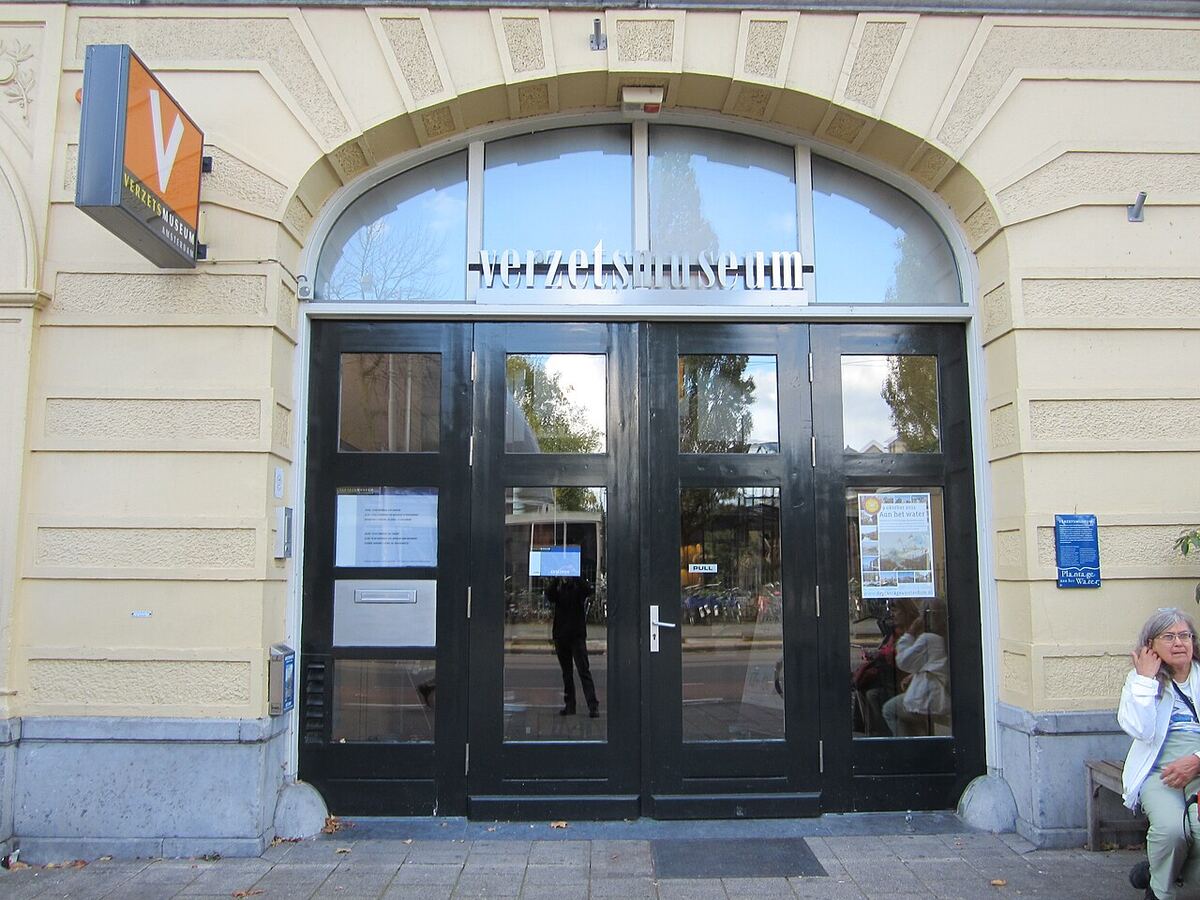
The entrance of the Dutch Resistance Museum in the Plancius building
WWIIMusicHistory
Step 18 · 6 min, Plantage Kerklaan 61

Dutch Resistance Museum

The best single museum for understanding the occupation: daily life, the persecution of Jews, and resistance, plus a Junior exhibition following four real children through the war. It reopened with a new permanent exhibition on 1 December 2022. (Verzetsmuseum)

Music footnote: the Plancius building (1874–76) was built for a Jewish choral society, Oefening Baart Kunst. (Verzetsmuseum)

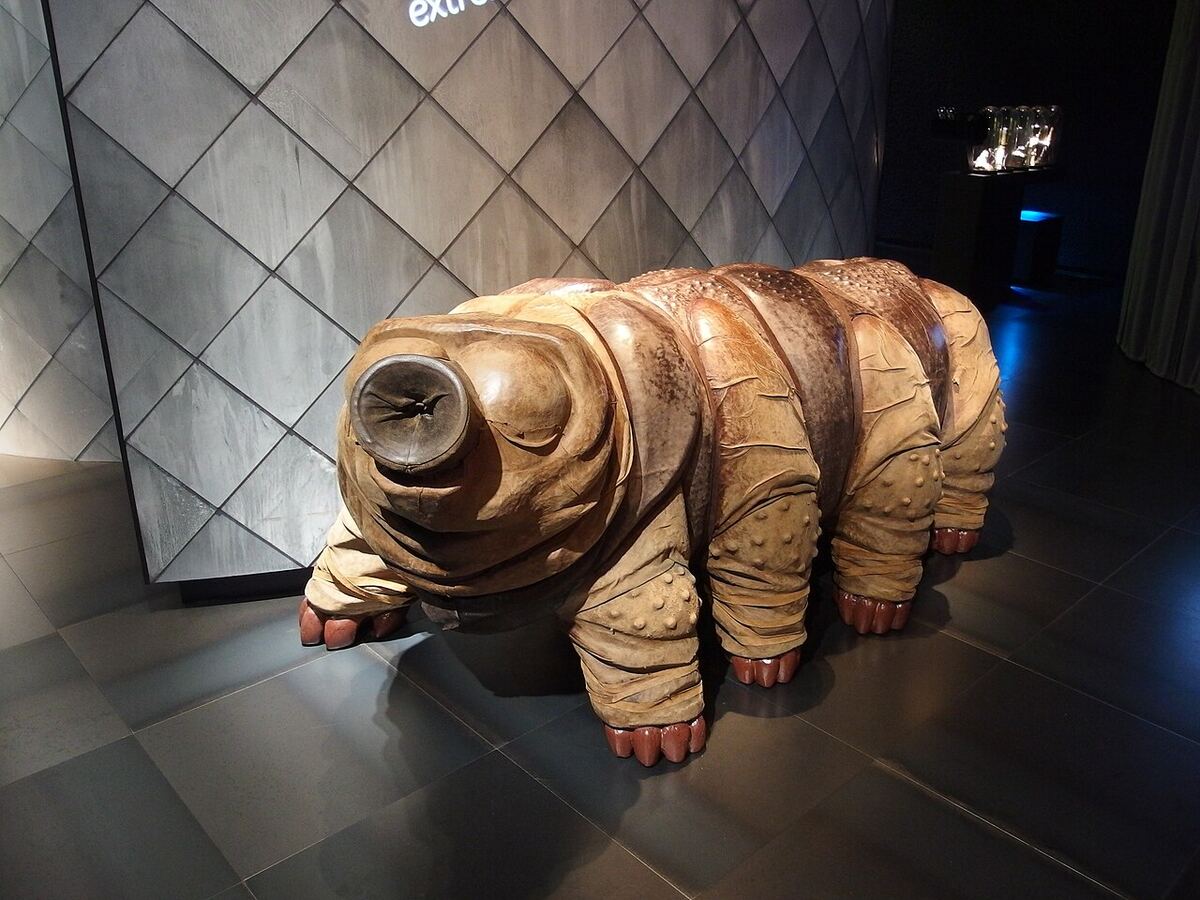
A giant model tardigrade inside Micropia
Science
Step 19 · Across the street, at Artis

Micropia — the world's first museum of microbes

Opened 30 September 2014 at Artis zoo, it puts living microbes under microscopes you can use yourself. It won the 2016 Kenneth Hudson Award as Europe's most innovative museum. (Wikipedia NL) It passed one million visitors in March 2026. (Artis)

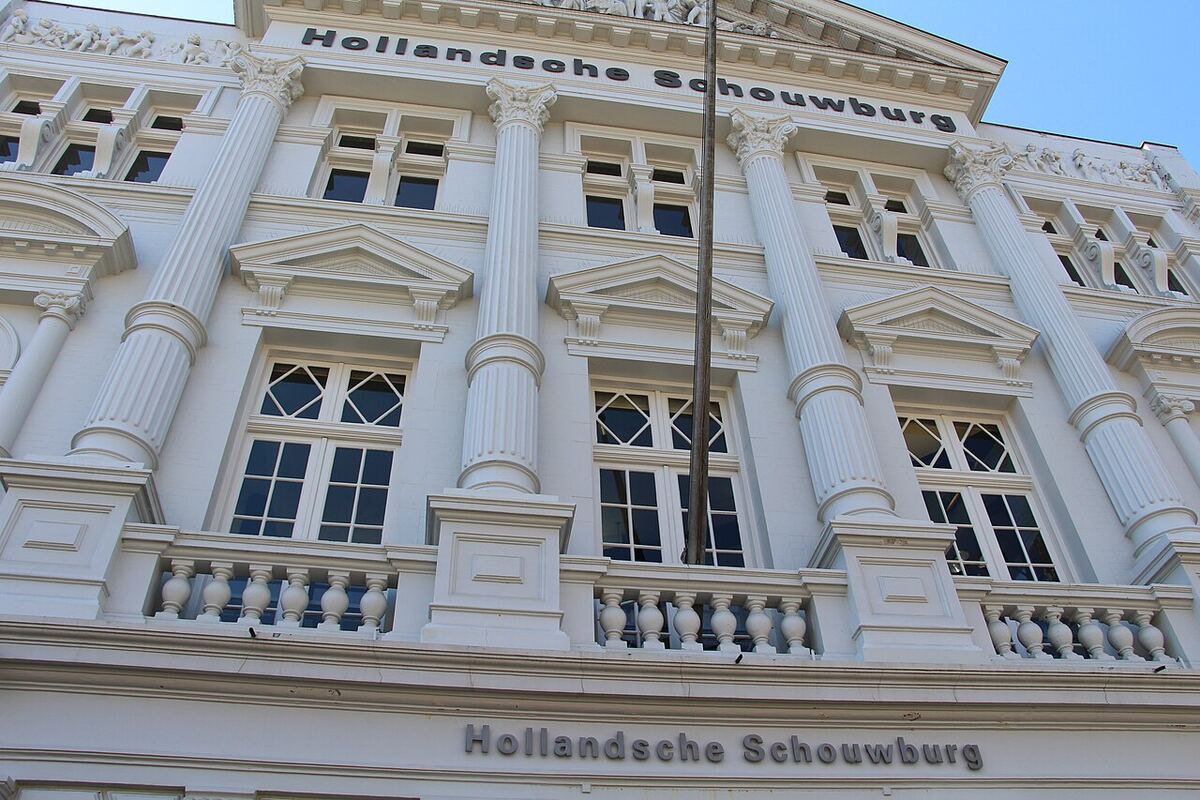
The white facade of the Hollandsche Schouwburg
WWIIHistory
Step 20 · 5 min, Plantage Middenlaan

National Holocaust Museum & Hollandsche Schouwburg

In 1942 and 1943 the Germans used this former theatre as a holding point for Jews about to be sent to Westerbork. Because it was overcrowded, children were held in a crèche across the street — and about 600 of them were smuggled out through the neighbouring teacher-training college, with help from Schouwburg administrator Walter Süskind, who kept them off the German lists. (Anne Frank House)

Children left hidden in rucksacks and shopping bags. Süskind himself died on a death march in February 1945. (NIW) The National Holocaust Museum opened opposite the Schouwburg on 11 March 2024. (Jewish Cultural Quarter)

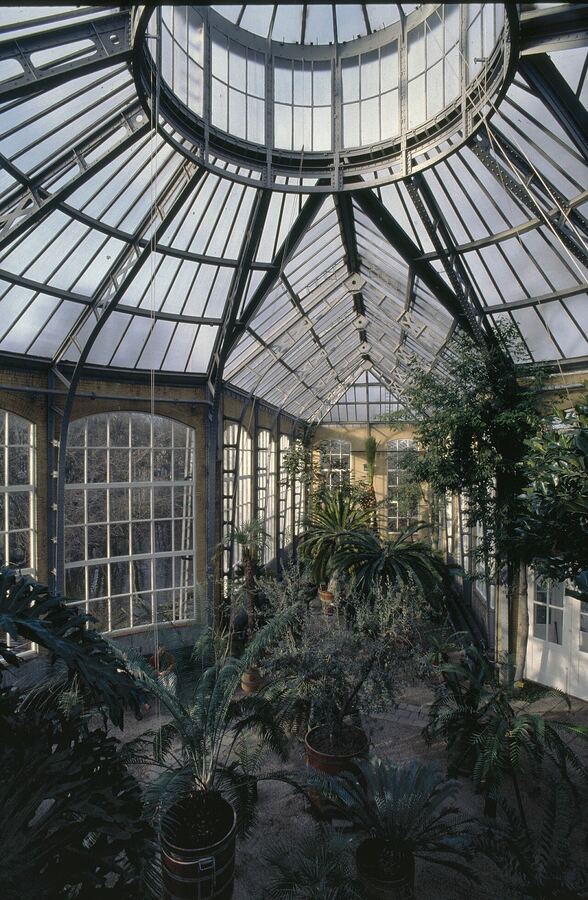
Inside the 1912 Palm House at the Hortus Botanicus
ScienceHistoryMedical
Step 21 · 2 min, Plantage Middenlaan 2a

Hortus Botanicus — the coffee plant that changed the world

Founded in 1638 as a medicinal herb garden, it's one of the oldest botanical gardens in the world. (Wikipedia) Coffee beans arrived here in 1706, and in 1714 Amsterdam gave coffee plants to Louis XIV — the lineage behind Latin American coffee. (Nederlands Dagblad)

Don't skip the greenhouses: a three-climate house (jungle, desert, South African fynbos), a butterfly house, and the 1912 Palm House. (Hortus Botanicus)

The Hunger Winter — a famine that became a landmark study

In the winter of 1944–45, a German food embargo left western Dutch cities on official rations of about 500 kcal a day by April 1945; estimates of famine deaths range from roughly 15,000 to 25,000. (PMC)

Babies born during and around the famine at Amsterdam's Wilhelmina Gasthuis became the Dutch Famine Birth Cohort — 2,414 people followed for decades. (Amsterdam UMC) Those exposed in early gestation went on to show smaller brain size, poorer cognition and more cardiovascular disease, and women had more breast cancer — independent of birth weight. It became one of the foundational human datasets for the developmental origins of adult disease. (Amsterdam UMC)

Leg Four · To the Water

Across the IJ: a science ship and a film palace

~2.3 km + 5 min ferry Walk the old harbour to NEMO, then catch the free ferry behind Centraal.
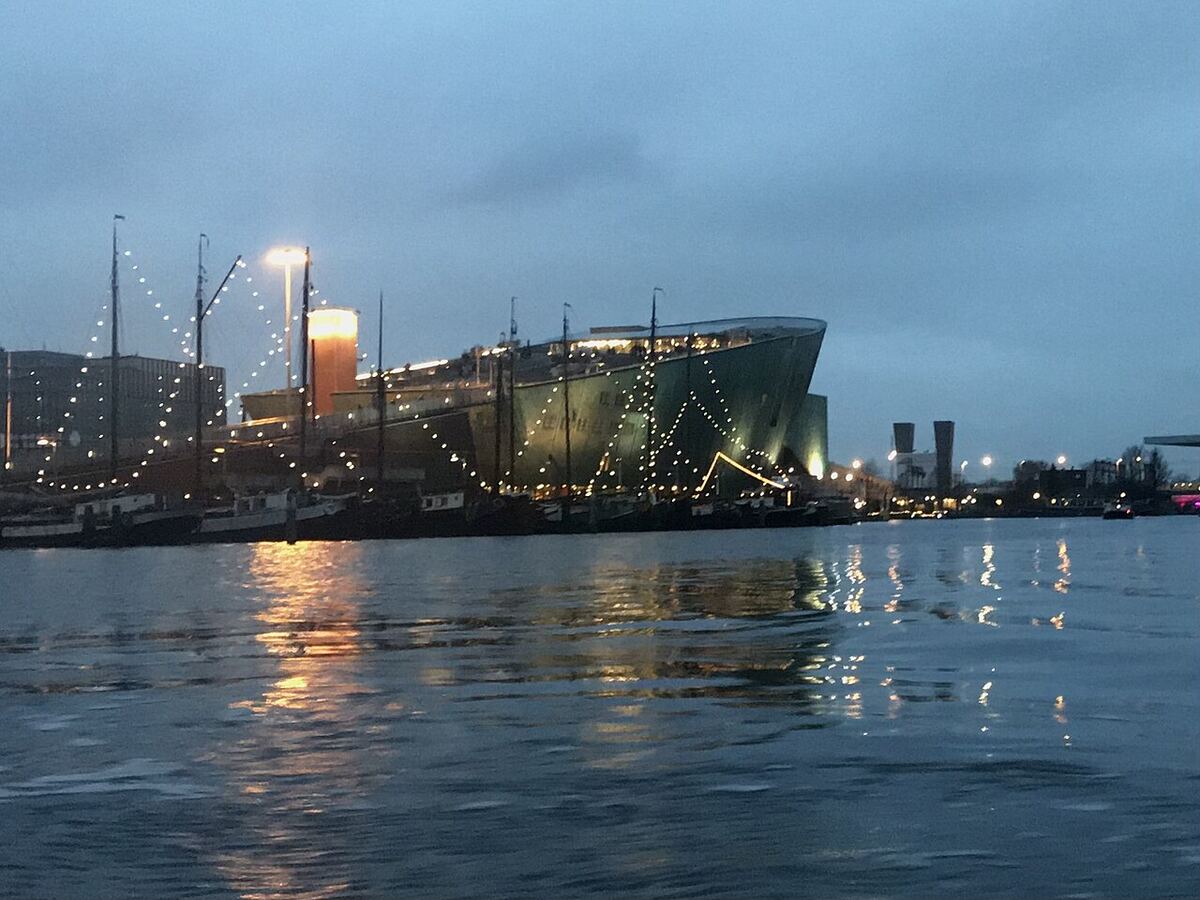
The green ship-like hull of NEMO Science Museum
Science
Step 22 · ~20 min north along the water

NEMO Science Museum

Renzo Piano's 1997 building rises out of the harbour like a green ship's hull. (DLR Magazine) Climb the stepped roof for the free public "piazza" — its planted roof holds more than 75 species of plants, and the view sweeps the old harbour. (NEMO)

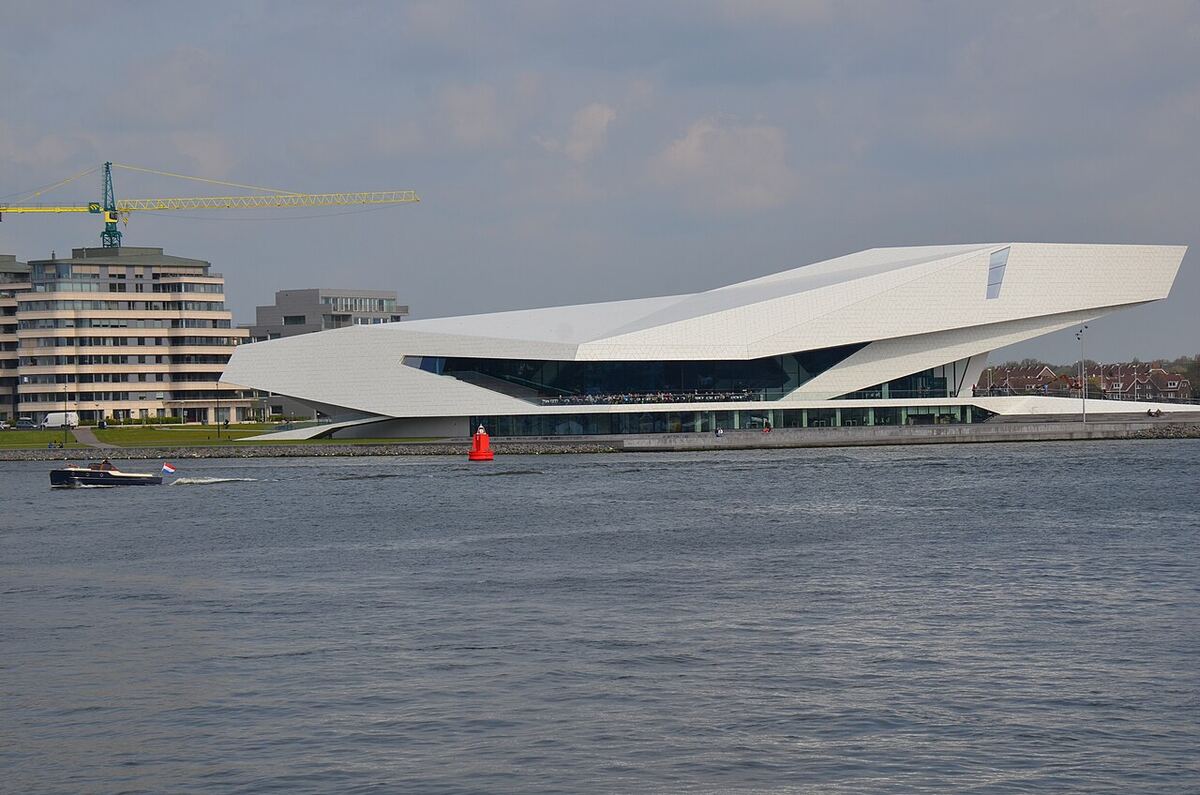
The angular white Eye Filmmuseum on the north bank of the IJ
FilmUnique
Finish · Free F3 ferry behind Centraal, under 5 min

The crossing — and the Eye Filmmuseum

Your Amsterdam "Staten Island Ferry": the F3 ferry from behind Centraal Station to Buiksloterweg is free, runs 24 hours a day every few minutes, and takes under five minutes. (Eye — Plan your visit)

Waiting on the far bank is the Eye Filmmuseum, opened in 2012 in a building by Vienna's Delugan Meissl, and home to a collection of more than 50,000 films. Exhibitions, a free basement film installation, and four cinemas. (Eye Filmmuseum)

Dutch cult film trivia: Eye screens Dick Maas's canal-killer thriller Amsterdamned (1988) — whose famous speedboat chase was actually filmed on the canals of Utrecht, and left star Huub Stapel with badly injured ribs. (Eye Filmmuseum)

Leg Five · Worth the Detour

If you've got more time: tram to the museums and music

10–25 min each by tram Not on the walking line — each is a short tram ride, best saved for a second day.
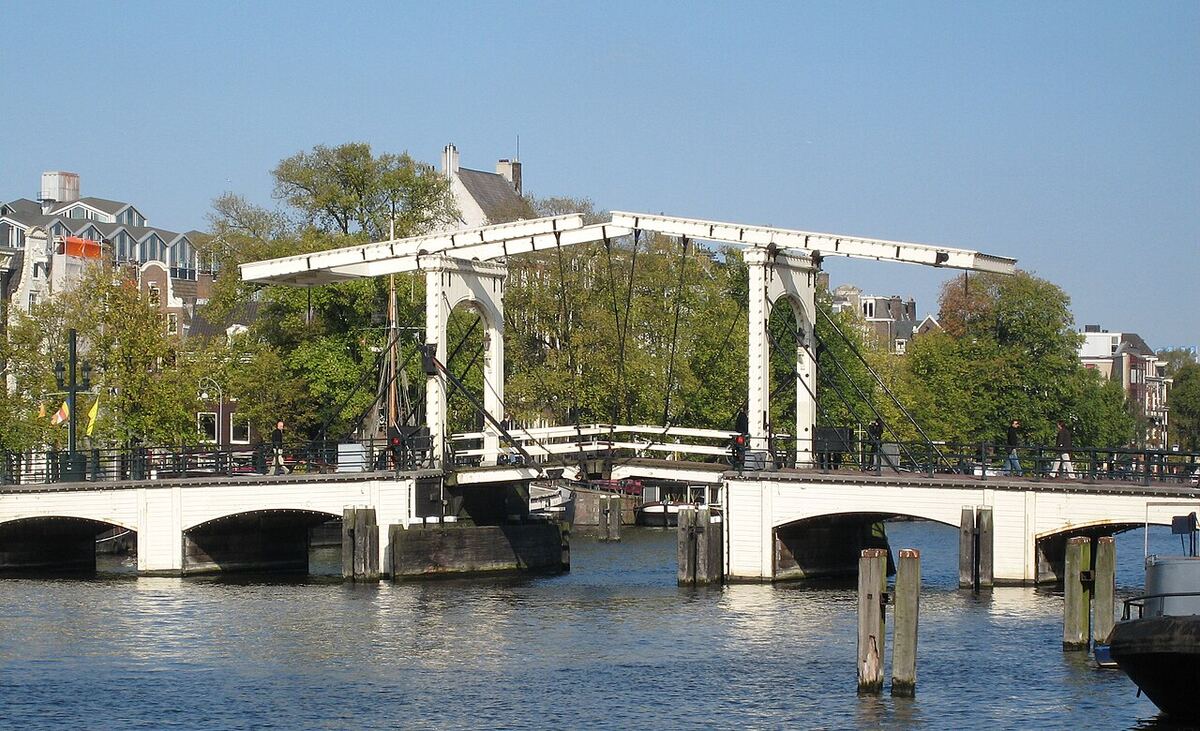
The white wooden drawbridge Magere Brug over the Amstel
FilmUnique
~10 min walk from Tuschinski

Magere Brug & James Bond's Amsterdam

Diamonds Are Forever (1971) filmed Sean Connery on the canal ring and the Magere Brug; Tiffany Case's apartment is Reguliersgracht 36. (I amsterdam) (IMDb)

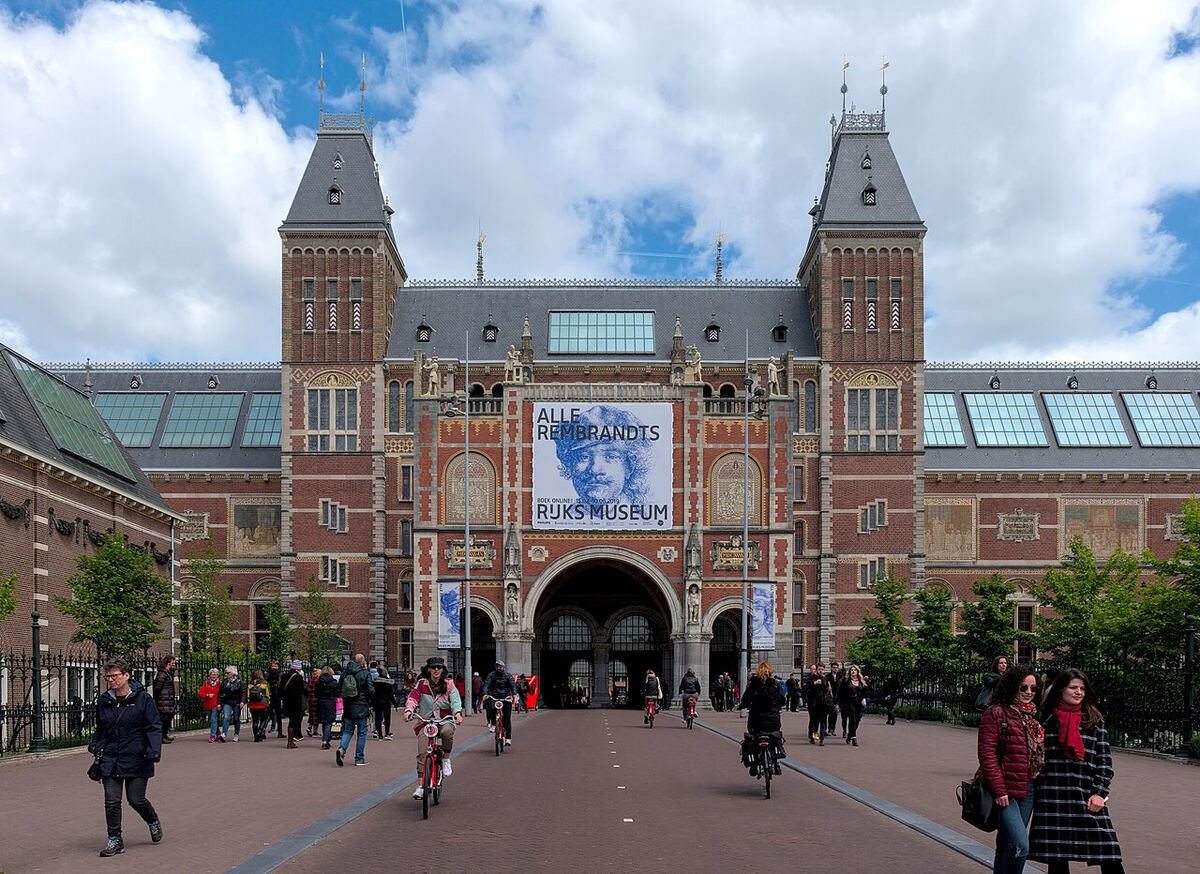
The south facade of the Rijksmuseum
WWIIScienceHistory
Tram 2 or 12 to Rijksmuseum

Rijksmuseum — where the Night Watch hid

In 1939 Rembrandt's Night Watch was evacuated to Medemblik castle, then to dune bunkers at Castricum and Heemskerk, and finally, from 24 March 1942, to a vault 33 metres inside the Sint-Pietersberg near Maastricht. (National Geographic NL) It left Maastricht by ship on 25 June 1945. (HBVL)

Science today: Operation Night Watch, launched in 2019, is the largest research project ever on the painting, including the largest photograph ever made — assembled by a robot from thousands of images. (Rijksmuseum)

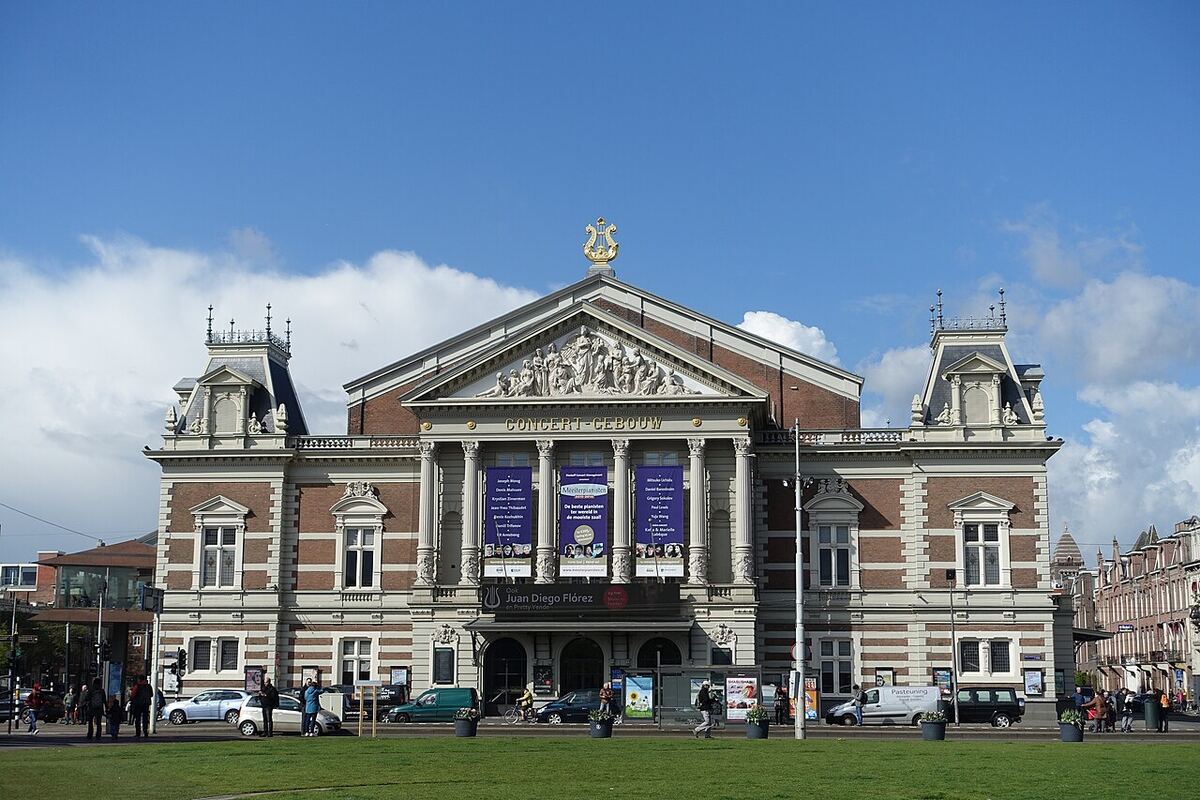
The Concertgebouw facade on the Museumplein
MusicScience
Tram 2 or 12 to Van Baerlestraat

Concertgebouw — perfect acoustics

Opened on 11 April 1888. (Concertgebouw) The acoustics weren't right at first — the stage was lowered and flattened in 1899 — but acoustician Leo Beranek consistently ranked its Main Hall among the world's three best, with Boston's Symphony Hall and Vienna's Musikverein. (Concertgebouw)

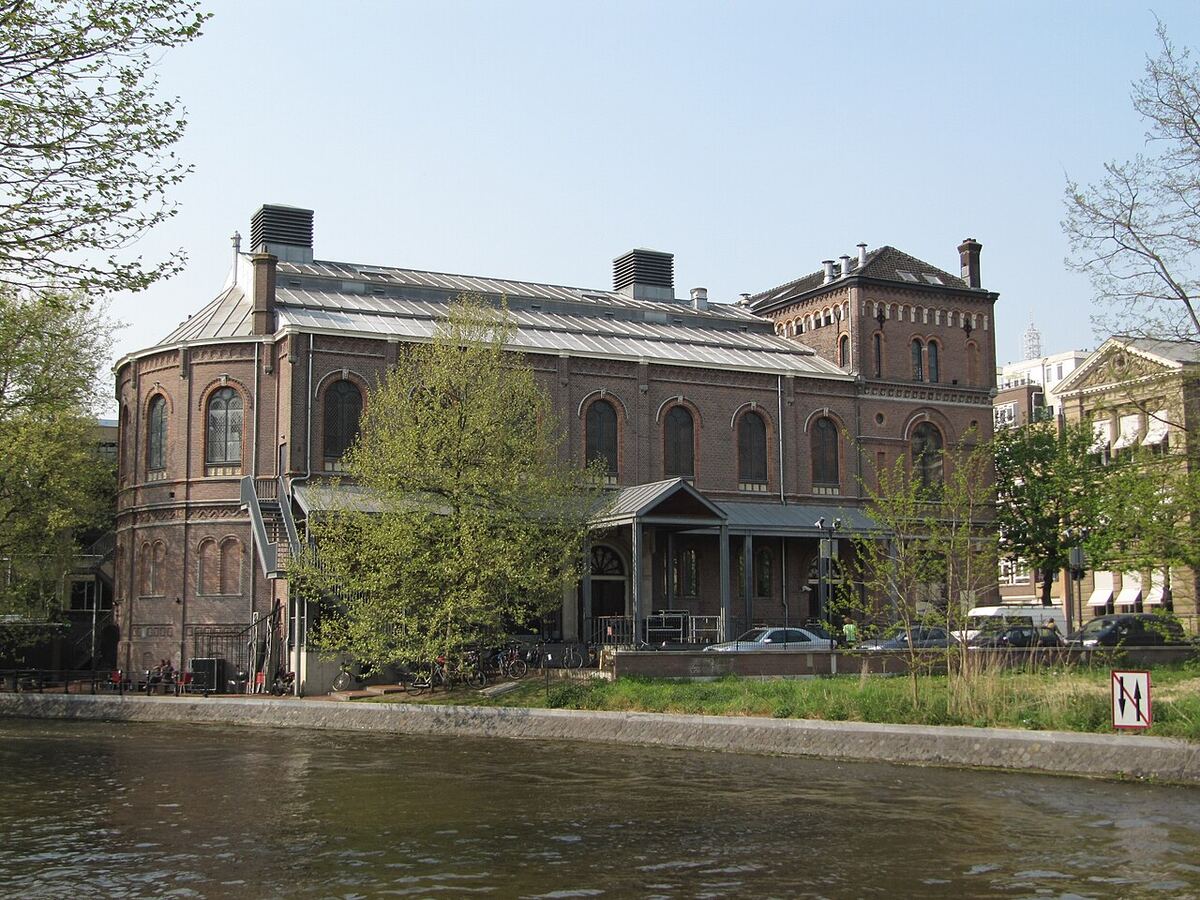
The former church building that houses Paradiso
MusicHistory
Tram 1, 2, 5, 7, 12 or 19 to Leidseplein

Paradiso — the pop temple

A 19th-century church that reopened on 30 March 1968 as the "Cosmic Relaxation Center Paradiso." Pink Floyd played two months later, and the Sex Pistols in January 1977. (Wikipedia) Bowie, the Rolling Stones, Nirvana and Prince have all played here. (Paradiso)

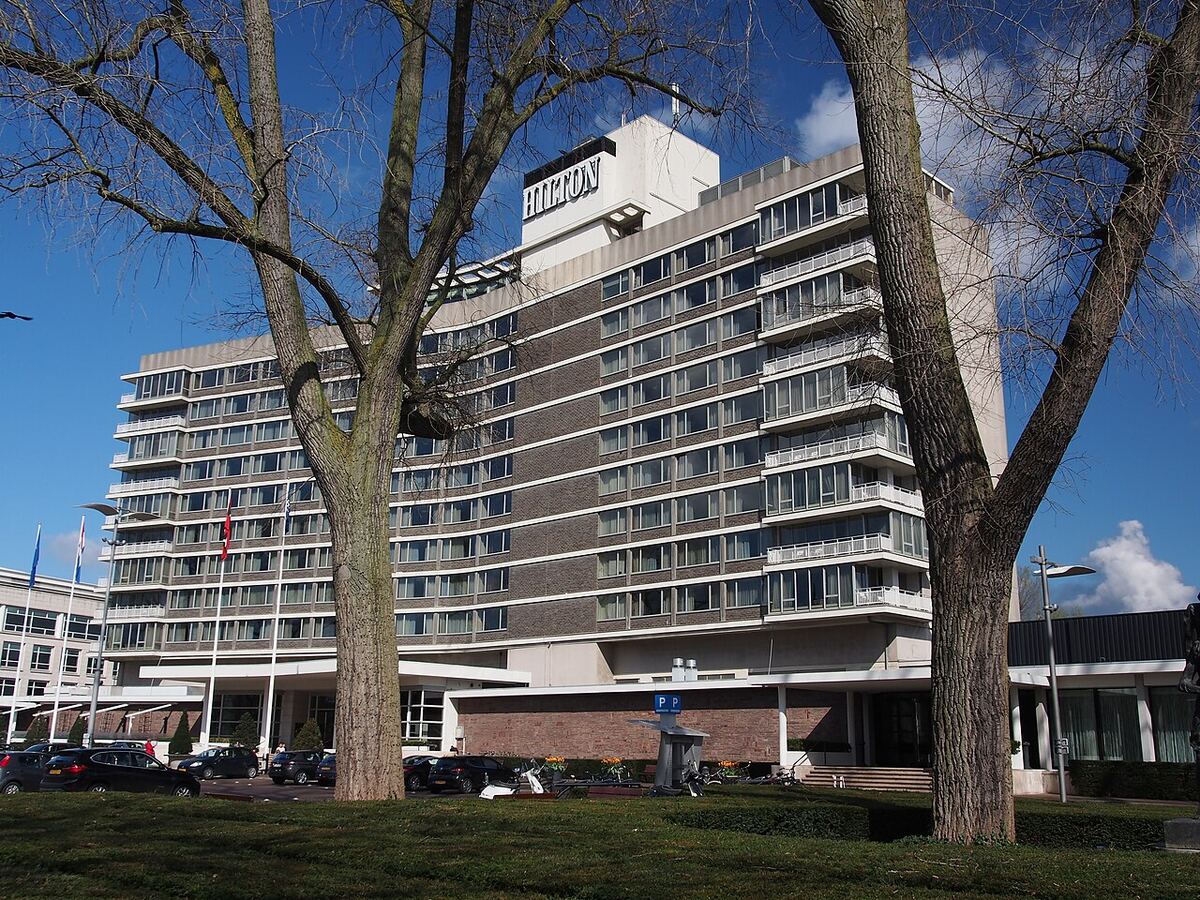
The Hilton Amsterdam hotel on the Apollolaan
MusicHistoryUnique
Tram 24 or 5, Amsterdam-Zuid

Hilton Room 902 — John & Yoko's Bed-In

From 25 to 31 March 1969, newlyweds John Lennon and Yoko Ono stayed in bed in room 902 of the Hilton on the Apollolaan and invited the world's press in to talk about peace. (Amsterdam City Archives) (BBC)

After the Walk

Post-walk eats near the finish

Three healthy spots near the finish, confirmed open in November 2026.
Post-walk pick

Café-Restaurant De Plantage

Plantage Kerklaan 36 · by the Artis gates

Mediterranean brasserie cooking in a glass conservatory attached to the 1870 Artis members' building — right after Micropia and the Resistance Museum. Lists several vegan and vegetarian dishes. (Gault&Millau) (RestauPlant)

Post-walk pick

De Deli Plantagebuurt

Plantage Kerklaan 41

A neighbourhood café for breakfast, brunch and lunch, steps from the Resistance Museum — the lighter, quicker option. (Tripadvisor)

Post-walk pick

Eye Bar & Restaurant

IJpromenade 1 · at the finish

All-day coffee, lunch and dinner with a waterfront terrace looking back across the IJ — a natural place to end the walk. (Eye Filmmuseum)

No stops match that combination of filters. Try clearing a category above.